Early Diagnostic Testing & Inclusive Learning Support
Education is the foundation of our lives as contributing members of this nation. Social experiences educate us on how to behave and respond to the behaviors of others. Religious and ethical teachings shape our morals, our value systems, and our personalities. Academic education introduces us to a vast pool of career and life paths for us to dive into. All that we are, is molded on the foundation of our childhood education.
But that molding is disrupted when we are exposed to learning environments which are unforgiving, unadaptive, and under-curated to our needs. According to the Situational Analysis of Barbados, this is the lived reality for too many of our students.
We send our beloved children into a system which takes too long to identify disabilities and learning deficiencies, has too few support systems, personnel, and tools, and is too unprepared for their eventual transition out of the educational system and into the workforce.
This reality has led us to conceptualize a threefold policy:
We propose the implementation of a rigorous and standardized screening at the primary school level for learning and development disorders such as Autism Spectrum Disorder (ASD), Attention Deficit Hyperactivity Disorder (ADHD) and Dyslexia. Early diagnosis will allow for timely interventions, ensuring that no child is left behind due to unaddressed learning needs.
1
(2) To support our children, parents, and teachers as they address these learning differences, a specialized unit of personnel will be trained to meet these needs.
2
And (3), an upgrade to the Modern School Infrastructure Program to ensure that inclusive classroom environments, adaptive technologies, and frameworks for accessibility are fundamental parts of all learning institutions.
3

Child Maintenance Facilitation & Support Scheme
How long will we allow our children to be deprived of the support and resources they need due to the sluggishness of our judicial system?
We intend to ensure that children receive consistent financial support from both parents without requiring mothers or fathers to undergo the adversarial and often public process of court litigation.
This provides a non-judicial mechanism for child maintenance enforcement and interim financial support through a revamped and modernised Child Maintenance Fund. Women with urgent, serious matters will still have the option of proceeding to court; they still have the option of seeking attorney advice. But while the court does its duty, the support a child needs should not be jeopardised. This is where our Out-of-Court Maintenance Agreement System (OCMAS) comes into play.
We want to allow parents, especially fathers, to fulfil maintenance obligations without court intervention or public embarrassment, and to promote amicable co-parenting.
Caregivers will apply via a secure online government platform or at the welfare or community help centers. The other parent would be invited to enter a voluntary child support agreement. Agreements are digitally signed and registered with the government, ensuring enforceability without formal court proceedings. Payments are made via a centralized portal, ensuring transparency and traceability.
For each child, support to the sum of 75 BBD per week will be given—a figure which will be regularly reassessed and updated to reflect inflation and cost of living. This support will be given for up to four months, with an option for renewal upon review. These payments are made from a revolving OCMAS fund, to be reimbursed when arrears are recovered from the non-paying parent. The recovery will be managed by the Office of the Attorney General in collaboration with the Child Maintenance Recovery Unit and Welfare Authority.
The implementation of this system helps us avoid court delays and backlog. It will reduce stigma and adversarial disputes, and encourages fathers’ voluntary compliance and responsible parenting. We all seek to live in a Barbados in which the judicial and welfare systems are fair, timely, and modern, and part of that ensures that we treat our children in the same way. A thriving society in our 21st century age must never allow its young to suffer due to inefficiencies and conflicts within the judicial system. Even before arrears are accumulated on the end of the parents, we must ensure early intervention and support for our children.
Career-Ready Technical Education
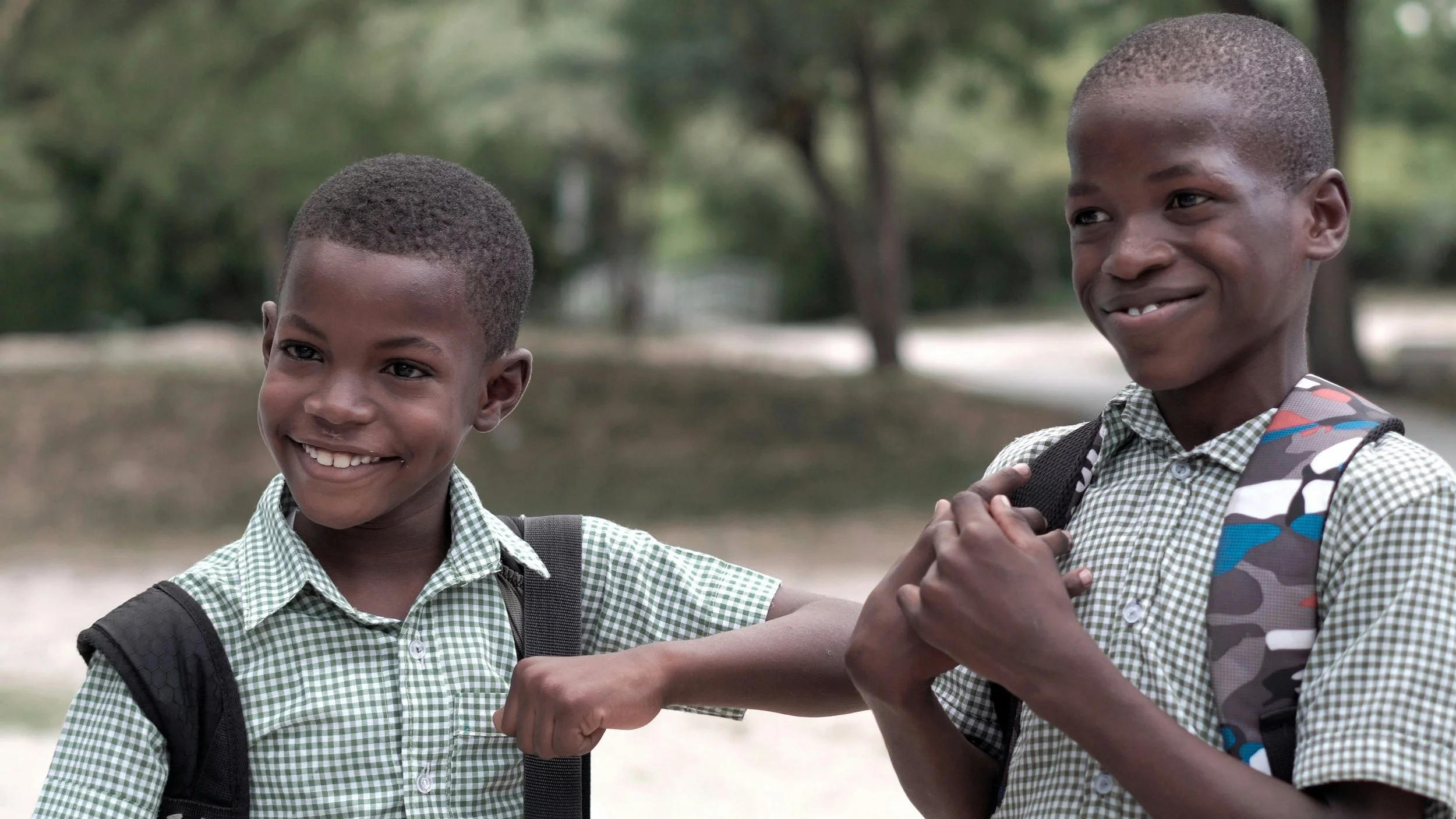
Our world has grown into more than just academics, and we must develop more learning facilities and opportunities that help our young people, whether they choose an academic path, or a skill-based one.
We call for the restructuring of the Alma Parris School into a Technical Career Institute, dedicated to developing vocational and technical skills in young people who show strong aptitude in trades, craftsmanship, engineering, or technology at the secondary level. This new institute will provide them with preparatory certifications and a pathway to progress into the world of work where they can enter a direct mentorship program that escalates to full-time employment and/or entrepreneurship.
Embracing the future: National Strategy on AI
We acknowledge the transformation potential of AI and the need for Barbados to be proactive, not reactive, in understanding and harnessing this technology. We advocate for:
A national review and research agenda on AI, including its application, ethical concerns, and socio-economic implications.
1
Identifying and mentoring young minds with aptitude in S.T.E.M to explore AI careers.
2
Positioning Barbados to be a regional leader in tech innovation by nurturing homegrown talent.
3
Through early intervention, vocational empowerment, and forward-looking technological policies, we can shape a future where all Barbadians, regardless of background or ability, have the tools to succeed.
Explore more of our manifesto